
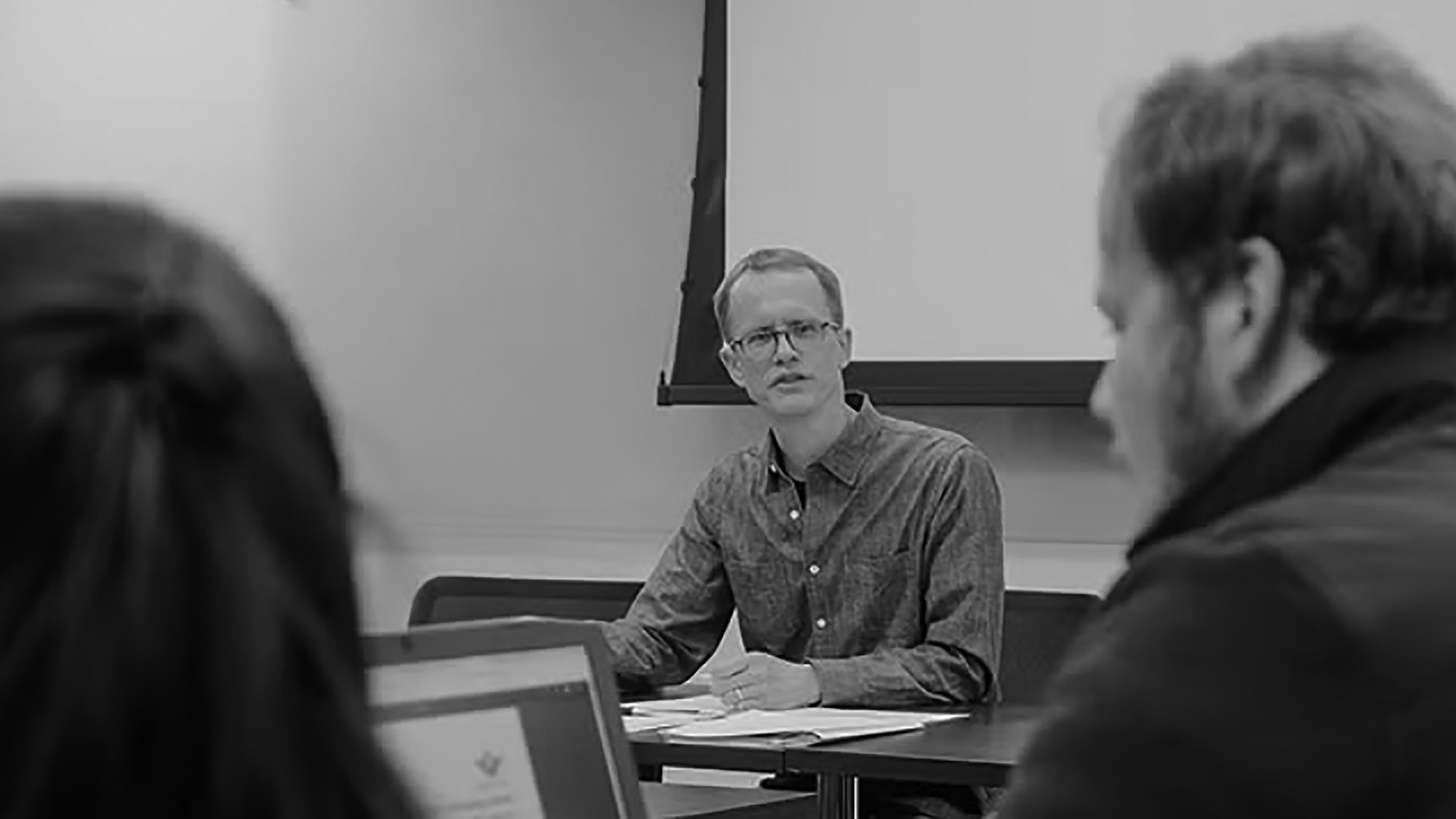
‘Built for this moment’
A conversation with Ploughshares Director Paul Heidebrecht
Project Ploughshares is entering a new chapter through a partnership between the Canadian Council of Churches and Conrad Grebel University College. Dr. Paul Heidebrecht joins as part-time Director for a transitional period of up to two years. He brings academic expertise, community peacebuilding experience, and strong church and civil society ties.
This transition comes as Project Ploughshares marks its 50th anniversary—a moment for reflection, renewal, and recommitment. In the conversation that follows, Ploughshares Senior Researcher Jessica West speaks with Paul about the partnership, his role during this transition, and the evolving peace and security landscape.
Jessica: The Canadian Council of Churches has entered into a new partnership with Conrad Grebel University College during a period of transition for Project Ploughshares. What prompted this collaboration now?
Paul: Conrad Grebel has been a stakeholder in Project Ploughshares from the outset. In 1976, Grebel provided space and support to Ernie Regehr and church-led peace and disarmament efforts, while also launching Canada’s first peace and conflict studies program at the University of Waterloo. Those early connections between researchers, educators, advocates, and students helped shape both PACS and Ploughshares.
In 2014, Ploughshares returned to the Grebel community when it joined the newly opened Kindred Credit Union Centre for Peace Advancement. Ploughshares’ mission remains closely aligned with Grebel’s, and its ongoing impact is deeply valued across the Grebel community.
Jessica: How does this arrangement support Project Ploughshares’ mission and long-term sustainability?
Paul: Grebel has a clear stake in Ploughshares’ long-term success and brings strengths that can support its next phase. Thanks to the support of a generous donor, this new arrangement provides additional capacity for organizational leadership and operations over the next two years.
As Director, I bring experience relevant to organizational renewal, having supported over thirty new peace and justice initiatives through the Grebel Peace Incubator since 2014. The broader Centre for Peace Advancement community also offers valuable expertise and opportunities for collaboration in the areas of peace education, research, and systems change.
Project Ploughshares has a remarkable history and continues to play a significant role in international disarmament at a time when the world is re-arming. I am convinced that Ploughshares was built for this moment. This is also a moment to renew the organizational foundation that supports that work.
Paul heidebrecht
Jessica: You are employed by Conrad Grebel University College while serving as Director of Project Ploughshares. How do you understand your role and responsibilities in this moment?
Paul: The leadership of Project Ploughshares is ordinarily more than a half-time role, so I will be focusing on priorities identified by the Management Committee. This includes relating to partners, enhancing financial sustainability, revitalizing governance, and supporting the staff team. I will be putting my energy into strategic and relational priorities rather than getting directly involved in program work.
I will continue to serve as the Director of the Kindred Credit Union Centre for Peace Advancement on a half-time basis over the next two years. That means I will be stepping back from from classroom teaching and some research activities. This arrangement also creates opportunities for collaboration between Ploughshares and the Centre for Peace Advancement. For example, the Grebel Gallery will host an exdhibit celebrating Ploughshares’ 50th anniversary later this year.
Jessica: You’ve also worked across both academic and community spaces. How do those experiences inform the way you approach leadership at Project Ploughshares?
Paul: My appproach to leadership has also been also shaped by directing MCC Canada’s Ottawa Office and serving on the steering committee of KAIROS Canada. At MCC, I saw how trust with government policymakers is built over time. I worked to sustain that credibility through careful research and strong relationships on behalf of our program partners. I also learned that collaboration unlocks potential—within organizations and across coalitions. That lesson has been reinforced through my work in the University of Waterloo’s innovation ecosystem: with the right leadership, institutions can be more than the sum of their parts.
Jessica: As Project Ploughshares marks its 50th anniversary, what does success look like in this transitional period, and how are you thinking about renewal and growth?
Paul: Project Ploughshares has a remarkable history and continues to play a significant role in peace and disarmament efforts at a time when the world is re-arming. I am convinced that Ploughshares was built for this moment. This is also a moment to renew the organizational foundation that supports that work. Over the next two years, my goal is to clarify our model and secure the leadership Ploughshares needs for its next fifty years. Major anniversaries are wonderful opportunities to reflect and celebrate, but also to reinvigorate an organization. Milestones create space not only to reflect on the past, but to listen to the next generation of partners and supporters. My ambition for 2026 is that we listen carefully and emerge with renewed clarity and purpose.
Jessica: Stepping back from the organizational questions for a moment, what do you see as the most pressing peace and security challenges facing Canada and the world right now?
Paul: Many of today’s most pressing peace and security challenges stem from technological change. Technology has transformed society, but it has also introduced profound risks. This includes the reliance on fossil fuels that is accelerating climate change, technological shifts that reshape labour markets and deepen inequality, and digital communication systems that are eroding trust in institutions and social norms. We are losing our capacity to work together at precisely the moment when collective action is most urgent.
Jessica: Where do you think civil society organizations like Project Ploughshares add distinctive value in responding to those challenges?
Paul: For five decades Ploughshares has worked to restrain the development and use of new technologies of warfare. We bring a critical lens to the intersection of peacebuilding and technology—contributing to global movements that have influenced government policy. As countries pursue new generations of nuclear weapons, expand military activity into domains such as space, and integrate AI into warfighting, this work is more urgent than ever. It requires collaboration—with long-standing and new partners—to identify practical levers for change in an increasingly fragmented policy environment. It also means strengthening engagement with grassroots supporters within and beyond our sponsoring churches and agencies.
Jessica: In the face of all this, what gives you hope?
Paul: I’ve had the privilege of working with remarkable changemakers through the Centre for Peace Advancement: students discovering how they can make a difference beyond the classroom, founders of start-ups in the Grebel Peace Incubator, artists sparking community conversations, and, of course, the dedicated staff of Project Ploughshares. I know that change is possible because I have seen it happen. Sometimes the impact is small, sometimes it is profound—but the fact that it happens gives me hope.
Jessica: As we close, what is one message you would like every Ploughshares Monitor reader to take with them from this conversation?
Paul: Project Ploughshares was built for this moment. In recent conversations, I’ve heard partners affirm the unique and important contributions the Ploughshares team is making. I’ve heard the same from sponsors and supporters who believe this voice is needed more than ever. As we mark this anniversary year, I’m committed to listening carefully and engaging widely. I welcome your reflections, ideas, and questions as we move forward together.
Published in The Ploughshares Monitor Spring 2026
